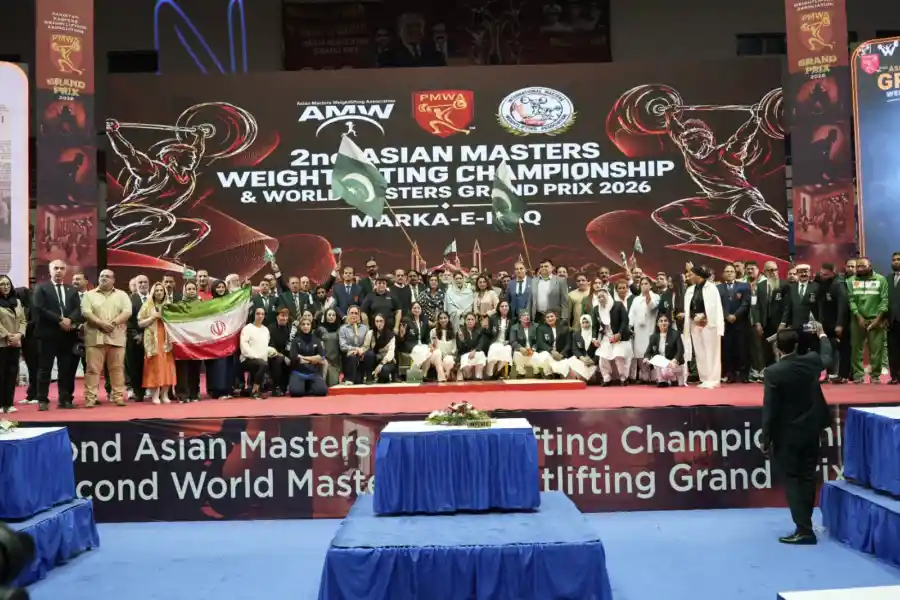
Islamabad event can inspire a new generation, strengthen international links and put masters sports on the national sporting map
Pakistan’s hosting of the Marka-e-Haq 2nd Asian Masters Weightlifting Championship and World Masters Grand Prix 2026 in Islamabad offers an important opportunity to strengthen weightlifting in the country, promote lifelong fitness and raise the profile of a sport that has considerable potential for growth.
The six-day event, being held from October 20 to 25 at Liaquat Gymnasium, Pakistan Sports Complex, has brought international masters weightlifters and sports officials together under the banner of the Pakistan Masters Weightlifting Association (PMWA), in collaboration with the Pakistan Sports Board (PSB).
With around 250 athletes expected from 21 countries, the championship represents more than an international sporting gathering. It provides Pakistan with an opportunity to showcase its sporting infrastructure, build relationships with international weightlifting bodies and encourage greater participation in a discipline that demands strength, technique, discipline and consistency.
A platform to inspire the next generation
One of the most important potential benefits of hosting an international weightlifting championship is its ability to inspire young athletes.
When local weightlifters see international competitors demonstrating their skills, they gain an opportunity to learn about training standards, competitive preparation and the discipline required to perform at a high level. Such exposure can help young athletes develop ambitions beyond local competitions.
For Pakistan, where cricket dominates much of the sporting landscape, creating visibility for sports such as weightlifting is essential to developing a broader sporting culture.
The championship can help bring weightlifting into the spotlight, encouraging schools, colleges, universities and sports clubs to introduce young people to the sport under qualified supervision.
However, lasting progress will depend on what follows the event. Talent identification programmes, accessible training facilities, qualified coaches and regular domestic competitions are necessary to turn inspiration into measurable sporting development.
Masters sports: proving that competition has no age limit
The championship also highlights the importance of masters sports, which provide opportunities for experienced athletes to remain physically active and participate in organised competition.
Masters weightlifting demonstrates that sport can remain part of a person’s life well beyond the conventional competitive years. It promotes discipline, fitness, camaraderie and healthy ageing while creating opportunities for athletes to continue pursuing personal goals.
In Pakistan, greater awareness of masters sports could encourage former athletes to return to competition and motivate adults who have never competed professionally to become involved in organised physical activity.
The development of masters weightlifting could also help establish a stronger community around the sport, connecting experienced lifters with younger athletes and allowing knowledge to be shared across generations.
Arshad Khan Turk’s initiative and the importance of continuity
Pakistan Masters Weightlifting Association President Arshad Khan Turk has played a key role in bringing the championship to Pakistan, working through the organisational challenges involved in hosting an international event.
The scale of the undertaking underlines the importance of coordination among sports associations, government institutions, international federations and event organisers.
The Pakistan Sports Board’s collaboration with the PMWA is particularly significant. The event also reflects the PSB’s broader initiative, conceived last year, to promote the sports economy through international sporting competitions.
Such cooperation can help create opportunities for Pakistani athletes to engage with international sporting communities while strengthening the country’s capacity to organise events of this nature.
The real test, however, will be whether the momentum generated in Islamabad continues after the visiting delegations leave. Regular masters competitions, coaching workshops, referee development and stronger links with international weightlifting organisations could help transform the championship into a foundation for long-term progress.
International events can contribute to the sports economy
International sporting competitions can generate activity beyond the competition venue.
Visiting athletes, coaches, officials and supporters may require accommodation, transport, food and other services. Local suppliers, event-management companies and tourism-related businesses can benefit from the associated demand.
Such benefits depend on the scale of participation, visitor spending and the effective organisation of the event. They should not be assumed automatically, but they offer a practical reason to integrate sports development with tourism and economic planning.
For Pakistan, a consistent calendar of well-organised international competitions could help strengthen its reputation as a sporting destination. Positive experiences for visiting delegations can also contribute to international sporting relationships and encourage future participation.
The Islamabad championship therefore provides an opportunity to explore how sports administration, event organisation and economic planning can work together.
What Pakistan needs to do next
To maximise the championship’s impact, the relevant sports authorities and associations should consider a sustained development plan built around several priorities.
Expand grassroots participation: Introduce weightlifting awareness and talent identification programmes in schools, colleges and sports academies.
Improve coaching standards: Provide regular training and certification opportunities for coaches, technical officials and referees.
Strengthen domestic competition: Organise regular age-group, senior and masters championships to give athletes consistent competitive opportunities.
Support athletes: Improve access to suitable equipment, safe training facilities, sports science and injury-prevention guidance.
Develop masters weightlifting: Establish a regular national calendar to encourage participation among experienced athletes across different age groups.
Build international partnerships: Maintain links with international weightlifting bodies and explore opportunities to host further championships and training programmes.
Measure economic impact: Assess participation, visitor spending, local business activity and event costs to improve the planning of future competitions.
These steps would help ensure that the benefits of hosting international events extend beyond ceremonies and medals.
A starting point for a stronger weightlifting culture
The Marka-e-Haq 2nd Asian Masters Weightlifting Championship and World Masters Grand Prix 2026 offers Pakistan a valuable opportunity to promote a sport that deserves greater public attention.
Its significance will ultimately be measured not only by the quality of competition or the number of participating countries, but also by its contribution to participation, athlete development, institutional cooperation and the future of masters sports.
With sustained support from the Pakistan Sports Board, the Pakistan Masters Weightlifting Association and other stakeholders, the event could help create a stronger foundation for weightlifting in Pakistan.
The challenge now is to convert the international spotlight into lasting progress: more athletes entering the sport, better coaching and facilities, stronger domestic competitions and greater opportunities for Pakistan to participate in and host international weightlifting events.