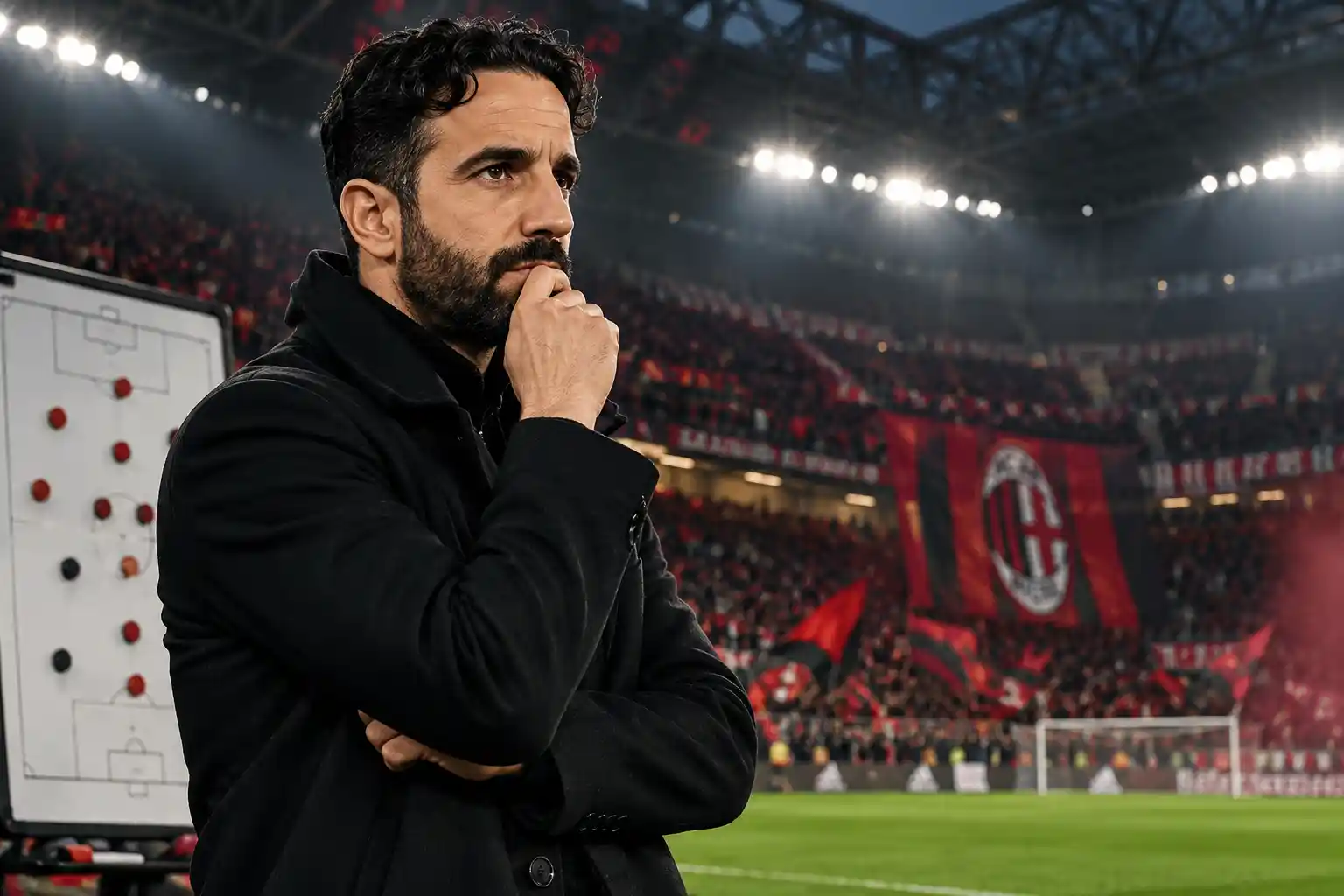
After a difficult spell at Manchester United, Ruben Amorim has brought new ideas and renewed energy to AC Milan. But a painful defeat against Bologna has raised questions about whether his ambitious approach can deliver lasting success.
Ruben Amorim arrived in Italy with something to prove. His Manchester United career had ended in disappointment, leaving doubts about his tactical decisions, relationships with club officials and ability to handle the pressure of managing one of Europe’s biggest teams.
AC Milan offered him an opportunity to rebuild his reputation.
For much of his early Serie A campaign, the Portuguese coach appeared to be doing exactly that. Milan looked more adventurous, played with greater intensity and began picking up results that suggested his methods were working.
But football rarely allows a manager to enjoy a smooth rebuilding process.
A heavy European defeat followed by a damaging home loss to Bologna has brought familiar concerns into focus. Now, with the Milan derby approaching, Amorim faces his toughest challenge since taking charge at San Siro.
A Promising Beginning at San Siro
When AC Milan appointed Amorim in June 2026, the club was looking for more than a temporary improvement in results.
The ambition was to build a recognisable playing identity, develop younger players and turn Milan into a side capable of competing consistently with Italy’s leading teams.
The early signs were encouraging.
Eight Serie A Matches Without Defeat
Amorim went unbeaten in his first eight league fixtures, matching a historic milestone previously achieved by Milan managers Héctor Puricelli and Luis Carniglia.
It was a significant achievement for a coach working with a new squad in an unfamiliar league.
Milan’s performances were not always convincing, but there was evidence of improvement. Players appeared more willing to press opponents, attack quickly after regaining possession and take greater risks in possession.
The victory away to Udinese strengthened the belief that Milan were heading in the right direction.
More importantly, the team appeared increasingly comfortable with Amorim’s expectations.
However, the unbeaten record concealed several weaknesses that would soon become difficult to ignore.
Bologna Expose AC Milan’s Biggest Weakness
Milan’s 4-2 defeat against Bologna on October 28 provided a harsh reminder that promising performances mean little without consistency.
The evening began badly when Samuel Mbangula gave Bologna an eighth-minute lead.
Yet Milan responded impressively.
Alphadjo Cisse Provides a Moment of Hope
Young midfielder Alphadjo Cisse scored twice in the first half, turning a difficult opening into a 2-1 advantage.
For a period, Milan looked in control. Their attacking movement was sharp, their pressing created opportunities and the home supporters had reason to feel confident.
Then everything changed.
Davide Bartesaghi’s own goal brought Bologna level in the 60th minute. Shortly afterwards, Mbangula restored the visitors’ advantage before completing his hat-trick late in the game.
What had looked like another positive result ended in Milan’s first Serie A defeat under Amorim.
Why Did Milan Lose Control?
The most concerning aspect was not simply the scoreline.
It was how dramatically the team lost its grip on the match.
Milan struggled to win individual battles, became vulnerable during defensive transitions and failed to respond effectively once Bologna gained momentum.
Their attacking ambition also left space for opponents to exploit.
These are worrying patterns for a side hoping to compete at the highest level. A successful team must know when to accelerate and when to slow the game down.
Against Bologna, Milan seemed unable to find that balance.
Is Amorim’s High-Intensity Football Becoming a Problem?
Amorim wants his players to be aggressive, organised and proactive.
His philosophy demands constant movement, coordinated pressing and quick reactions whenever possession changes hands.
When executed effectively, this approach can make Milan extremely difficult to play against.
But it comes with physical demands.
The Risk of Playing at Full Speed
High pressing requires more than enthusiasm. Players must maintain their positioning, recognise pressing triggers and conserve enough energy to remain effective late in matches.
Milan have occasionally struggled with that final requirement.
Their earlier victory against Atalanta offered a warning. Despite establishing a three-goal advantage, the Rossoneri allowed their opponents back into the contest and eventually survived a tense finish.
Against Bologna, the consequences were considerably worse.
The concern is that Milan sometimes expend so much energy establishing control that they cannot sustain it.
That is a tactical challenge, not merely a fitness issue.
Injuries Have Complicated the Situation
Amorim also has legitimate concerns about squad availability.
Injuries have restricted his options, making it harder to rotate players and manage their workload during a demanding schedule.
The 3-0 Europa League defeat against Bournemouth on October 22 was another setback.
Goalkeeper Mike Maignan was sent off during the first half, leaving Milan with ten players for much of the evening.
That dismissal significantly reduced the team’s chances of recovering.
However, difficult circumstances cannot explain every weakness. Milan still need to improve their defensive organisation and game management.
Injuries may make those problems more visible, but they do not necessarily create them.
What Has Amorim Learned From Manchester United?
One of the biggest questions surrounding Amorim’s appointment was whether he would repeat the tactical rigidity that attracted criticism during his time in England.
At Manchester United, his commitment to a particular system frequently became part of the debate about his management.
There were concerns that he sometimes prioritised his preferred formation over the strengths of the players available.
His early months in Italy suggest a more flexible approach.
Greater Tactical Flexibility
Although Amorim built his reputation using a three-defender structure, Milan have also operated with a back four.
The 4-4-1-1 setup used in recent matches is evidence of his willingness to adjust the team’s shape.
This matters because successful coaches must balance their football philosophy with the practical realities of their squad.
Amorim does not need to abandon his beliefs. He needs to demonstrate that those beliefs can be adapted when circumstances demand it.
His willingness to make changes could become one of the most important lessons from his Manchester United experience.
Managing Players Is Just as Important as Managing Tactics
There is another positive sign.
Milan’s players have generally shown a willingness to embrace the new approach.
Experienced figures such as Luka Modric have acknowledged the difficulties of adapting to different tactical demands while expressing confidence in the direction of the project.
That support matters.
A manager can introduce innovative ideas, but those ideas only become effective when the players understand and trust them.
Maintaining that confidence through difficult results will be essential.
The Milan Derby Could Change Everything
The next challenge is particularly significant.
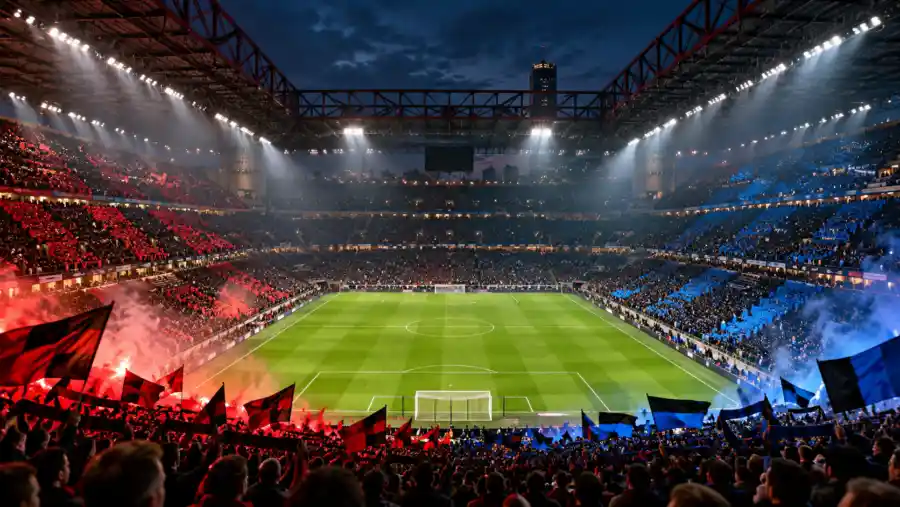
AC Milan face Inter on Saturday, October 31, in a fixture that carries enormous importance for supporters, players and coaches alike.
For Amorim, the Derby della Madonnina represents an opportunity to change the conversation surrounding his team.
A Chance to Respond to Bologna
A strong performance against Inter would provide evidence that Milan can recover from setbacks and compete with elite opposition.
The challenge will be to combine attacking ambition with defensive discipline.
Milan cannot afford another second-half collapse.
They must also be smarter when deciding how aggressively to press and how much space to leave behind their defensive line.
Three Areas Milan Must Improve
1. Defensive concentration
Milan need to remain organised throughout matches, particularly after conceding goals or losing possession in dangerous areas.
2. Energy management
The team must learn to control the tempo rather than attempting to overwhelm opponents during every phase of play.
3. Mental resilience
Strong teams respond to setbacks without allowing one mistake to become a series of problems.
These improvements would make Milan more reliable regardless of the result against Inter.
Is Ruben Amorim Building Something Sustainable?
It would be premature to declare Amorim’s Milan project either a success or a failure.
Eight unbeaten Serie A games demonstrated that his ideas can produce results. The defeats against Bournemouth and Bologna revealed how much work remains.
Both observations can be true.
There are signs that Amorim has become more adaptable since leaving Manchester United. His willingness to change formations and work with different player combinations suggests that the experience at Old Trafford may have influenced his thinking.
Yet tactical flexibility alone will not guarantee success.
Milan need greater consistency, improved defensive awareness and a better understanding of how to manage the physical demands of their playing style.
The Portuguese coach has already shown that he can make his new team exciting.
The next step is making them dependable.
Final Verdict: Progress Is Clear, but the Real Test Starts Now
Ruben Amorim has not arrived at AC Milan as a completely different manager. His football remains ambitious, energetic and tactically demanding.
What appears to have changed is his willingness to adapt.
That could ultimately prove more valuable than any individual result.
The Bologna defeat was painful, but it also exposed problems that Milan can work to correct.
Saturday’s derby against Inter will provide a demanding examination of how quickly those lessons are being absorbed.
For Amorim, the challenge is no longer simply proving that his ideas can work.
It is proving that they can keep working when the pressure rises, the opposition improves and circumstances turn against his team.